This store requires javascript to be enabled for some features to work correctly.
 Free Shipping on US Orders $100+
 60-Day Money-Back Guarantee
 Dermatologist-Approved
Free Shipping on US Orders $100+
60-Day Money-Back Guarantee
Dermatologist-Approved




Retinol
What Not To Use With Retinol: Ingredients To Avoid
Which ingredients not to layer with retinol, how to still use them at different times, and what pairs well for smoother, calmer skin.
Retinol works best with the right partners. Pair it with the wrong ingredients and you get redness, peeling and a damaged barrier; pair it with the right ones and it becomes easier to use and more effective.
This guide covers what not to use at the same time as retinol, how to still use those ingredients, what pairs well, and how to buffer retinol if your skin is sensitive.
Key Takeaways
- Don’t layer exfoliants with retinol. AHAs, BHAs, scrubs and other retinoids on the same night raise the risk of irritation.
- Separate, don’t give up. Many ingredients, like vitamin C and benzoyl peroxide, work well with retinol when used at different times.
- Hydrating and repairing ingredients pair best. Hyaluronic acid, ceramides, niacinamide and DNA repair enzymes make retinol easier to tolerate.
Why Combinations Matter
Retinol speeds skin renewal, which temporarily makes the outer layer thinner and more reactive while your skin adjusts. Adding other ingredients that exfoliate or dry the skin stacks the irritation, while some ingredients can also make certain retinoid formulas less stable. Smart pairing protects both your results and your barrier.
What Not To Use At The Same Time As Retinol
You don’t have to give these up, just keep them out of your retinol step.
| Ingredient | Why not with retinol | How to use both |
|---|---|---|
| AHAs (glycolic, lactic) and BHAs (salicylic) | Double exfoliation increases redness, peeling and sensitivity. | Use acids on alternate nights, or in the morning. |
| Benzoyl peroxide | Very drying, and it can break down some retinoid formulas. | Use benzoyl peroxide in the morning and retinol at night. |
| Vitamin C | Both are potent; layering them can sting sensitive skin. | Vitamin C in the morning, retinol at night. See vitamin C with retinol. |
| Other retinoids or prescription treatments | Doubling up on retinoids, including prescription tretinoin or oral isotretinoin, causes severe dryness. | Use one retinoid at a time and follow your doctor’s plan. |
| Physical scrubs and cleansing brushes | Abrasion on retinol-sensitized skin causes micro-irritation. | Skip scrubs while using retinol; a gentle cleanser is enough. |
| Alcohol-heavy toners, witch hazel and sulfur | Strip moisture and add to retinol’s drying effect. | Switch to a hydrating, alcohol-free toner. |
Ingredients That Pair Well With Retinol
These make retinol more comfortable to use consistently.
Hyaluronic acid
Draws moisture into skin to offset dryness. See retinol or hyaluronic acid first.
Ceramides
Rebuild the lipid barrier retinol can temporarily weaken.
Niacinamide
Calms redness and strengthens the barrier without exfoliating.
DNA repair enzymes
Help repair the UV-induced DNA damage behind visible aging, which retinol doesn’t address. Learn more.
A Simple Routine That Keeps Them Apart
Splitting actives between morning and evening lets you use more of them without irritation.
| Routine | What to use |
|---|---|
| Morning | Gentle cleanser, vitamin C or DNA repair serum, moisturizer, broad-spectrum SPF 30+. |
| Retinol nights | Gentle cleanser, retinol on dry skin, hyaluronic acid, moisturizer. |
| Non-retinol nights | Gentle cleanser, an exfoliating acid if you use one, or simply hydrating serum and moisturizer. |
How To Buffer Retinol For Sensitive Skin
Buffering means placing a hydrating layer under or around retinol to soften its effect.
- Cleanse and dry completely. Damp skin absorbs retinol faster and increases irritation.
- Apply a thin layer of moisturizer or hyaluronic acid. Let it settle for a minute.
- Apply a pea-sized amount of retinol over the top.
- Finish with more moisturizer if your skin is dry — the “sandwich” method.
- Start two nights a week and build slowly. See how often to use retinol.
When To Pause Retinol
A few situations call for a short break from retinol.
- Before and after professional treatments such as peels, microneedling or laser. Follow your provider’s timing.
- Before waxing any treated area, since retinol makes skin more likely to lift or tear.
- When your skin is irritated, sunburned or broken. Let it heal first.
- If you’re pregnant, trying to conceive or breastfeeding. Retinoids are generally advised against; ask your doctor about alternatives.
Final Thoughts
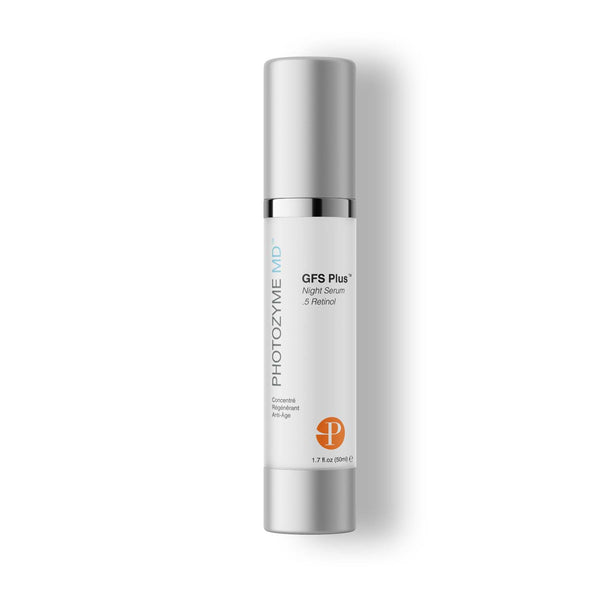
The rule is simple: keep exfoliants, other retinoids and drying products out of your retinol step, split other potent actives between morning and night, and surround retinol with hydrating, barrier-supporting ingredients. Photozyme’s GFS Plus Night Serums make this easier by pairing retinol with three DNA repair enzymes and a triple ceramide complex in one step.
Frequently Asked Questions
What should I not mix with retinol?
Avoid using AHAs, BHAs, benzoyl peroxide, other retinoids, physical scrubs and alcohol-heavy toners in the same step as retinol.
Can I use vitamin C and retinol together?
Yes, at different times: vitamin C in the morning and retinol at night gives you the benefits of both with less irritation.
Can I use salicylic or glycolic acid with retinol?
Not on the same night. Use acids on alternate nights or in the morning to avoid over-exfoliation.
Can I use niacinamide with retinol?
Yes. Niacinamide pairs well with retinol and can help calm redness and support the barrier.
Can I use retinol with prescription tretinoin?
No. Use one retinoid at a time. If you’re on a prescription retinoid or oral isotretinoin, follow your doctor’s guidance before adding anything.
Should I stop retinol before waxing?
Yes. Pause retinol on any area you plan to wax, as it makes skin more fragile. Ask your provider how many days to stop beforehand.
Shop the article
Products mentioned in this article