This store requires javascript to be enabled for some features to work correctly.
 Free Shipping on US Orders $100+
 60-Day Money-Back Guarantee
 Dermatologist-Approved
Free Shipping on US Orders $100+
60-Day Money-Back Guarantee
Dermatologist-Approved




Hydration
High vs Low Molecular Weight Hyaluronic Acid: Which Is Better For Your Skin?
High molecular weight hyaluronic acid smooths the surface; low molecular weight hydrates deeper. Here’s which suits your skin.

Not all hyaluronic acid is the same. The size of its molecules, its molecular weight, decides where it works in your skin and what it does there. That’s why two hyaluronic acid serums can feel and perform very differently.
Here’s how high and low molecular weight hyaluronic acid compare, which suits your skin, and why many formulas combine them.
Key Takeaways
- High molecular weight stays on the surface. It forms a hydrating film that smooths skin and slows water loss.
- Low molecular weight reaches deeper. Smaller molecules hydrate the upper layers of skin for longer-lasting moisture.
- Multi-weight formulas do both. Combining sizes gives immediate smoothing and deeper hydration.
What Is Molecular Weight?
Hyaluronic acid is a long chain of sugar molecules. Molecular weight describes how long that chain is: long chains are “high molecular weight,” short chains are “low molecular weight.” Size controls how far it can travel into skin, because larger molecules can’t pass through the skin’s outer layer.
High vs. Low Molecular Weight Compared
| Feature | High molecular weight | Low molecular weight |
|---|---|---|
| Where it works | On the skin’s surface | In the upper layers of the skin |
| Main benefit | Immediate smoothing; reduces water loss | Longer-lasting, deeper hydration |
| Feel | Silky film | Absorbs quickly, often barely felt |
| Best for | Sensitive and very dry skin | Dehydrated skin and fine lines from dryness |
| Consideration | Effect is mostly on the surface | Very small fragments can feel more noticeable on reactive skin |
Benefits Of Each Type
High molecular weight
Creates a breathable layer that holds moisture on the surface, softens texture and gives an instant plumping effect.
Low molecular weight
Moves into the upper layers to hydrate from within, supporting longer-lasting moisture and suppleness.
Multi-weight blends
Combine surface smoothing with deeper hydration, which is why many dermatologists prefer them.
Which Is Better For Your Skin?
- Sensitive or reactive skin: start with high molecular weight or a multi-weight formula without very small fragments. See why hyaluronic acid can sting.
- Dehydrated skin: a multi-weight formula hydrates both surface and deeper layers.
- Mature skin: multi-weight hyaluronic acid with a rich moisturizer helps with dryness-related fine lines.
- Oily skin: any type works; choose a lightweight serum.
How To Use Hyaluronic Acid For Best Results
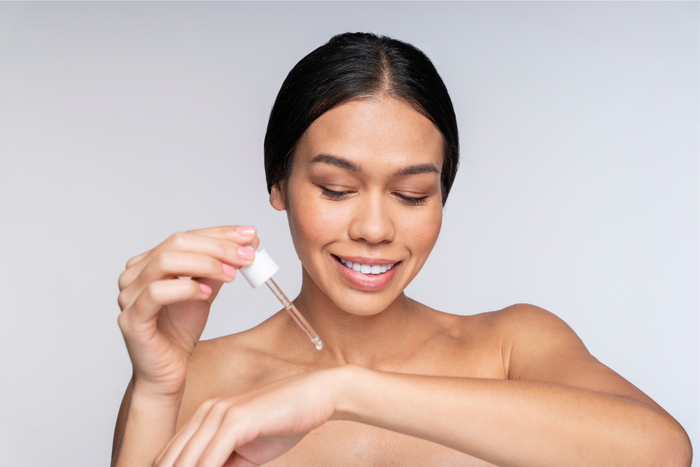
- Apply to slightly damp skin after cleansing.
- Press in a few drops rather than rubbing.
- Seal with moisturizer so the water it attracts stays in your skin.
- Use morning and night, with SPF in the morning.
Using retinol too? See retinol or hyaluronic acid first.
Hydration Plus Repair
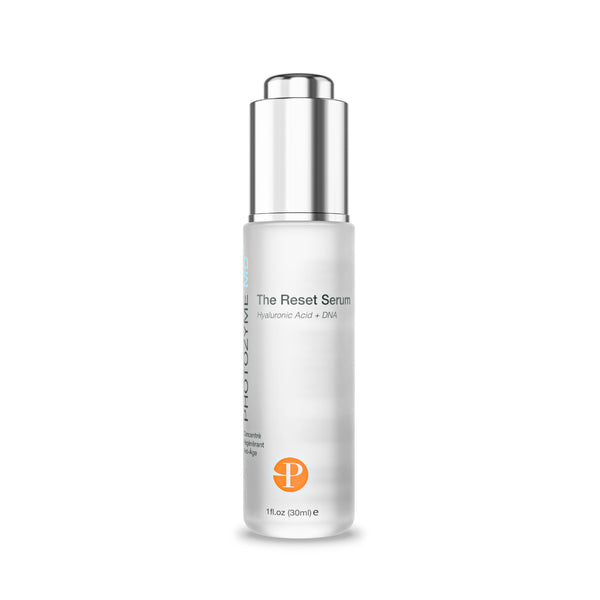
Hydration improves how skin looks now, while UV-induced DNA damage drives how it ages. Photozyme’s Reset Serum pairs hyaluronic acid with DNA repair technology, so one step hydrates and supports repair.
Final Thoughts
High molecular weight hyaluronic acid smooths and protects the surface; low molecular weight hydrates more deeply. For most people, a multi-weight formula applied to damp skin and sealed with moisturizer gives the best of both. Learn more about the benefits of hyaluronic acid.
Frequently Asked Questions
Is high or low molecular weight hyaluronic acid better?
Neither is universally better. High weight smooths the surface; low weight hydrates deeper. Multi-weight formulas combine both.
What does low molecular weight hyaluronic acid do?
Its smaller molecules reach the upper layers of skin, providing longer-lasting hydration from within.
Does high molecular weight hyaluronic acid penetrate skin?
Not significantly. It stays on the surface, where it forms a hydrating film and reduces water loss.
Which is better for sensitive skin?
High molecular weight or a multi-weight formula without very small fragments tends to be gentler on sensitive skin.
How do I know which type a product contains?
Look for terms like “multi-weight,” “multi-molecular” or “hydrolyzed hyaluronic acid” (a lower weight form) on the label or product description.
Can I use hyaluronic acid every day?
Yes, morning and night. It pairs well with nearly every other ingredient.
Shop the article
Products mentioned in this article