This store requires javascript to be enabled for some features to work correctly.
 Free Shipping on US Orders $100+
 60-Day Money-Back Guarantee
 Dermatologist-Approved
Free Shipping on US Orders $100+
60-Day Money-Back Guarantee
Dermatologist-Approved




Sun Damage
Can You Use Vitamin C And Sunscreen Together?
Yes, vitamin C and sunscreen work well together. Photozyme explains the right order, timing, and pairings for brighter, better-protected skin.

Yes, vitamin C and sunscreen can be used together, and dermatologists often describe the pairing as one of the most effective steps in a morning routine. Each covers a gap the other leaves open, which is why so many routines layer them daily.
Photozyme has long argued that sunscreen alone is not enough, a position reflected in its vitamin C serum, which adds DNA repair enzymes to a classic antioxidant formula. This page explains how the two work together, the benefits of wearing both, the correct order, and the small mistakes that weaken results.
Key Takeaways
- The pair is complementary: Sunscreen filters UV rays while vitamin C neutralizes the free radicals that still reach the skin.
- Order follows texture: Vitamin C serum goes on clean skin first, then moisturizer, with sunscreen always last.
- Neither replaces the other: Vitamin C offers no meaningful UV filtering, and sunscreen alone leaves oxidative damage partly unaddressed.
Why The Two Belong In The Same Morning
Vitamin C and sunscreen target the same daily threat from different angles.
Different jobs, same threat
Sunscreen absorbs or reflects UV radiation before it penetrates the skin. Even high-SPF formulas let a small percentage through, and visible and infrared light still generate free radicals. Vitamin C neutralizes those reactive molecules before they damage collagen and trigger pigmentation. Its benefits extend beyond protection to brightening and collagen support.
Sensitive skin
Sensitive skin can use both, though concentration matters. L-ascorbic acid at high strength and low pH may sting reactive skin, so starting every other morning helps. Mineral sunscreens with zinc oxide tend to suit sensitive skin better than chemical filters. See what SPF to use to match strength to daily exposure.
What the research says
Studies at Duke University found that a topical blend of 15% vitamin C and 1% vitamin E provided roughly four times the protection against UV-induced redness compared with untreated skin, and adding 0.5% ferulic acid doubled that protection again. These results reflect antioxidant defense layered under sunscreen, not a replacement for it.
Benefits Of Wearing Both Daily
Combining the two yields advantages neither delivers on its own.
- Broader defense: Sunscreen blocks most UV rays, while vitamin C neutralizes free radicals generated by what slips through.
- Fewer new dark spots: Vitamin C slows melanin production, helping prevent sun-triggered pigmentation.
- Collagen protection: Antioxidant support limits UV-driven collagen breakdown.
- Brighter tone over time: Daily use gradually evens dullness that sunscreen alone doesn’t correct.
- Support against pollution: Vitamin C also counters oxidative stress from smog and urban particles.
- Longer-lasting antioxidant reserve: Vitamin C remains active in the skin for hours between sunscreen applications.
Putting Together A Morning Routine
A short, well-ordered routine lets each product do its job.
- Start with a clean, balanced base. Vitamin C absorbs best on freshly cleansed skin. Photozyme’s Gentle Hydrating Cleanser lifts away oil and residue without stripping, so the serum that follows can work without added irritation.
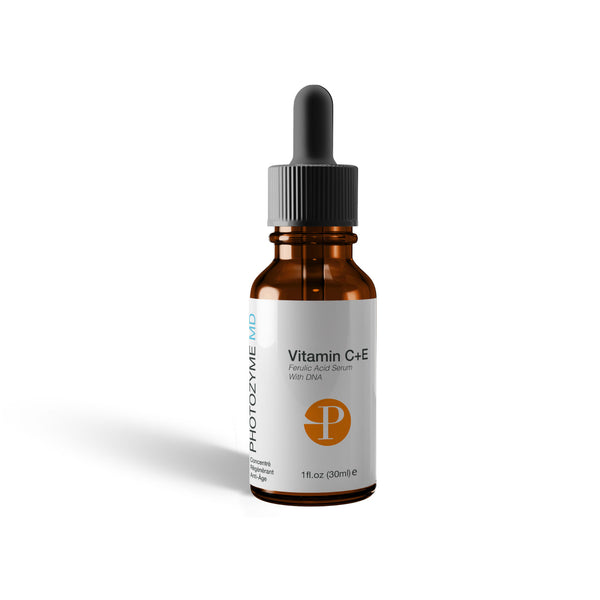
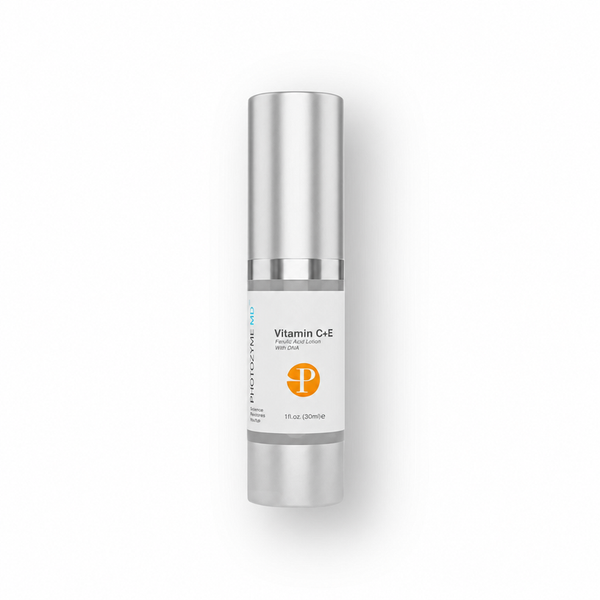
- Apply vitamin C next. Photozyme’s Vitamin C+E Ferulic Acid Serum with DNA pairs 15% L-ascorbic acid with vitamin E, ferulic acid, panthenol and DNA repair enzymes, mirroring the antioxidant ratio in the research above. Press a few drops onto dry skin and wait one to two minutes. See how to use vitamin C serum.
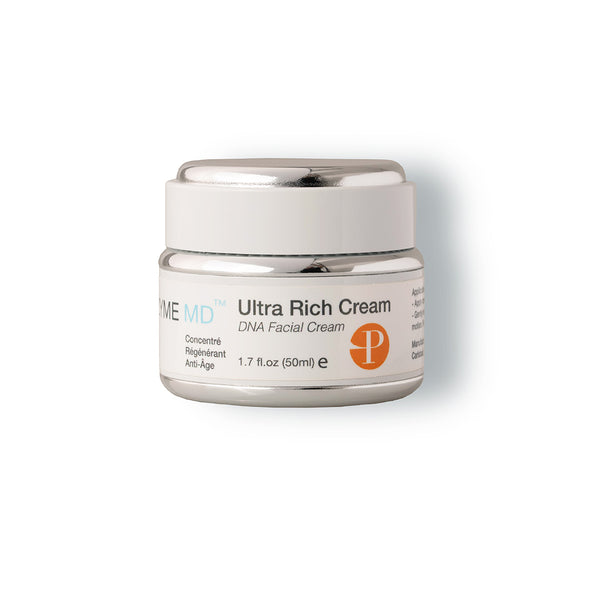
- Moisturize. Dry or mature skin benefits from a moisturizer between serum and sunscreen, such as Photozyme’s Ultra Rich DNA Facial Cream. Oily skin may need only a thin layer, or a lightweight sunscreen with built-in hydration.
- Finish with sunscreen. Broad-spectrum SPF always goes on last. See the best daily sunscreens for face and how often to reapply.
Small Mistakes That Weaken The Combination
| Mistake | Fix |
|---|---|
| Layering textures that pill | Let each layer set before the next, and pair similar textures so the sunscreen film stays even. |
| Skipping reapplication | Morning sunscreen breaks down with sweat and time, and vitamin C can’t compensate. Reapply every two hours outdoors. |
| Mixing them in your palm | Mixing dilutes sunscreen and can destabilize vitamin C. Apply them as separate layers. |
Final Thoughts
Vitamin C and sunscreen work as partners: one filters UV, and the other neutralizes what gets through. Our belief at Photozyme that sunscreen alone is not enough is reflected in this pairing, which adds antioxidant and DNA repair support to daily protection. For more on going beyond sunscreen, see why sunscreen is not enough.
Frequently Asked Questions
Can vitamin C and sunscreen be mixed in one step?
Mixing them in the palm can dilute sunscreen and disrupt vitamin C stability, so separate layers work better.
Is vitamin C safe to use at night instead?
Yes, though morning use adds daytime antioxidant protection, which is where the pairing with sunscreen helps most.
Do sunscreens with vitamin C replace a separate serum?
Usually not. The vitamin C in sunscreens is often low in concentration and less stable than in dedicated serums.
Can vitamin C cause sun sensitivity?
No. Unlike retinoids and exfoliating acids, vitamin C doesn’t increase photosensitivity when used correctly.
How long should vitamin C dry before sunscreen?
One to two minutes is usually enough for the serum to absorb.
Does vitamin C work with tinted sunscreen?
Yes. Tinted mineral sunscreens layer well over vitamin C and add protection against visible light.
Shop the article
Products mentioned in this article