Anti-aging peptide serum use yields its best results when incorporated correctly into a routine that addresses multiple aging mechanisms simultaneously, rather than relying on peptides as the sole active ingredient.
Morning Versus Evening Positioning
Peptides are photostable and can be used morning or evening, unlike retinol, which requires strict evening-only application. Morning use alongside vitamin C and SPF creates a combined antioxidant and collagen-stimulating layer that defends against daytime UV-induced collagen degradation while simultaneously signaling fibroblast production. Evening use alongside DNA repair enzymes concentrates structural support during the overnight cellular repair window when collagen synthesis activity peaks.
Pairing Peptides With DNA Repair Enzymes
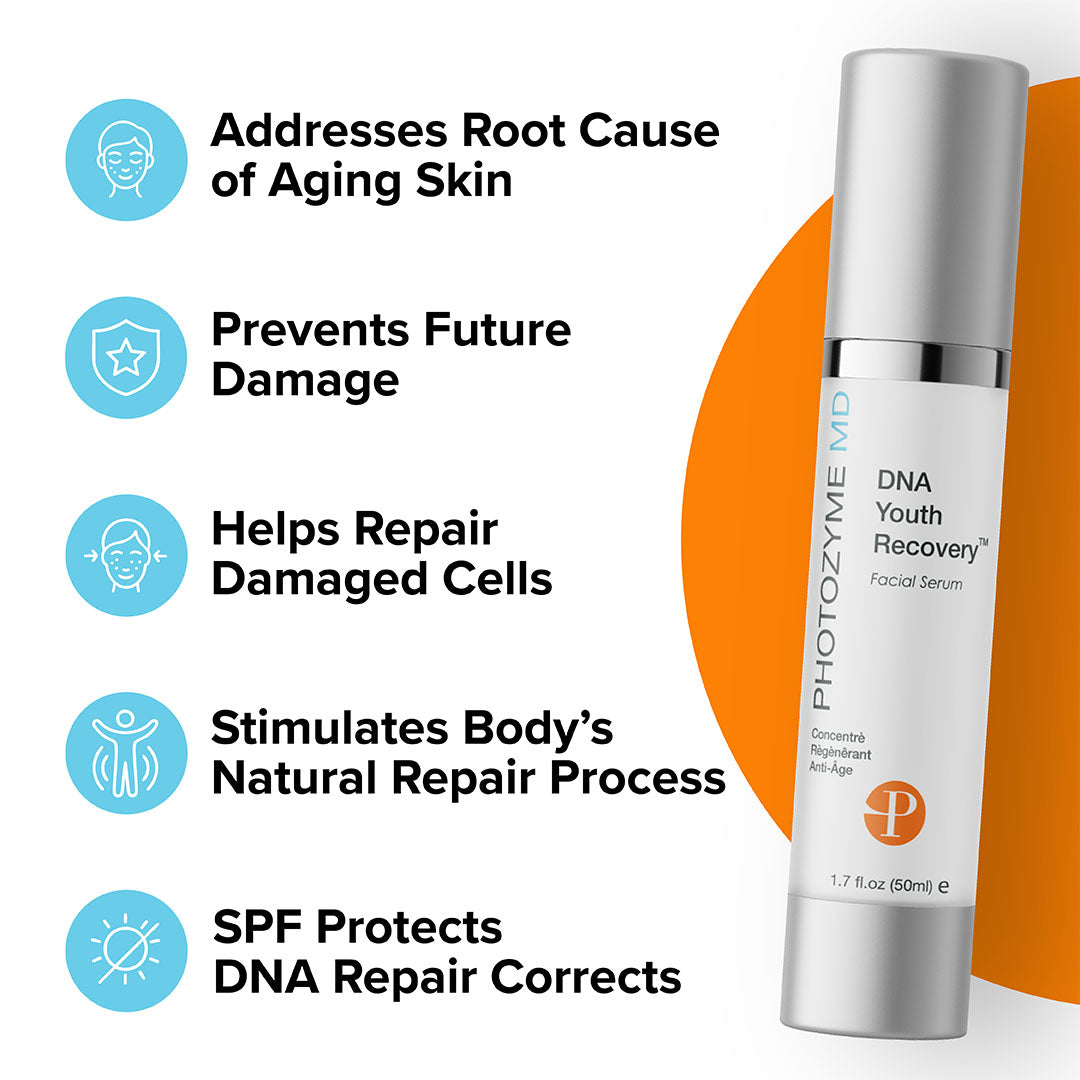
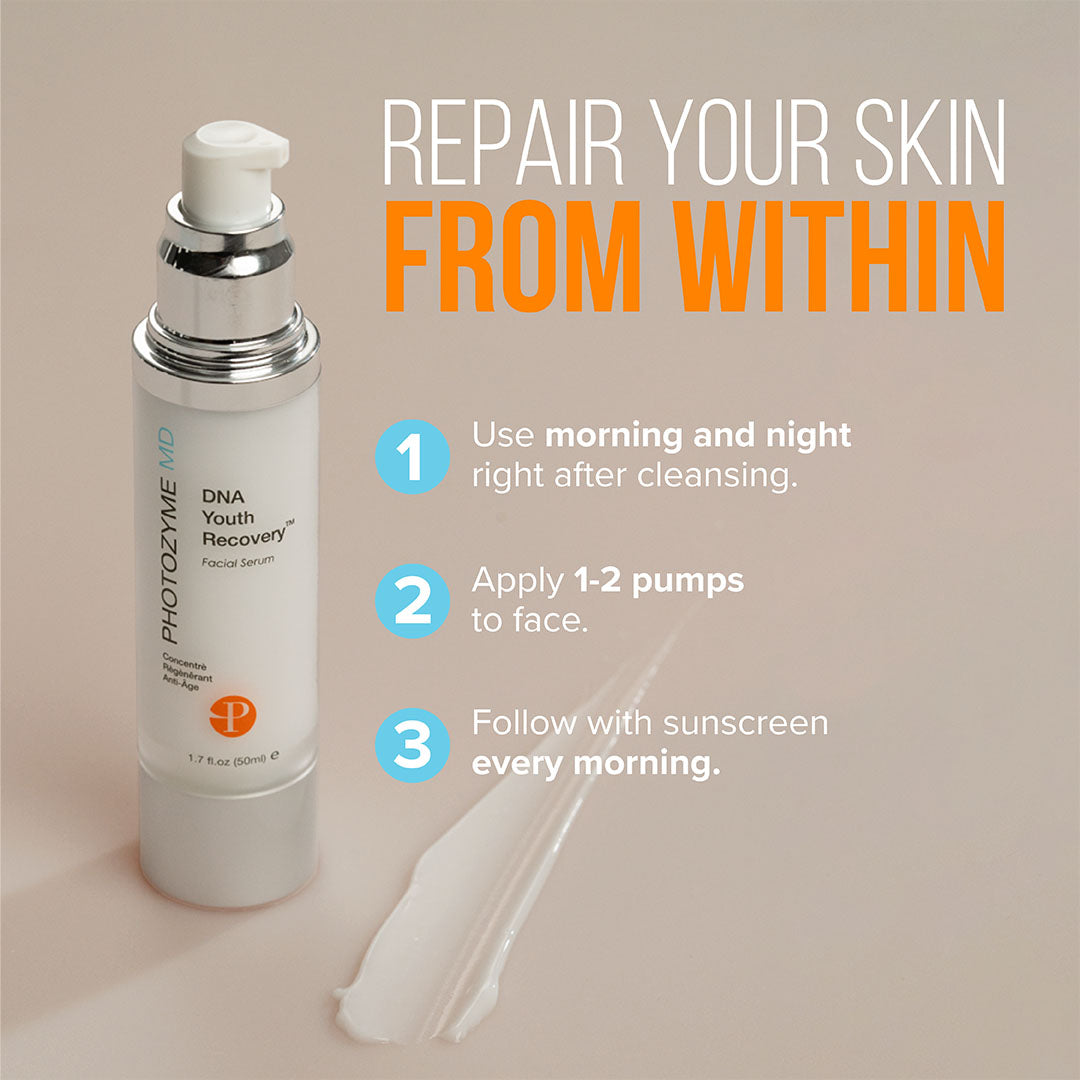
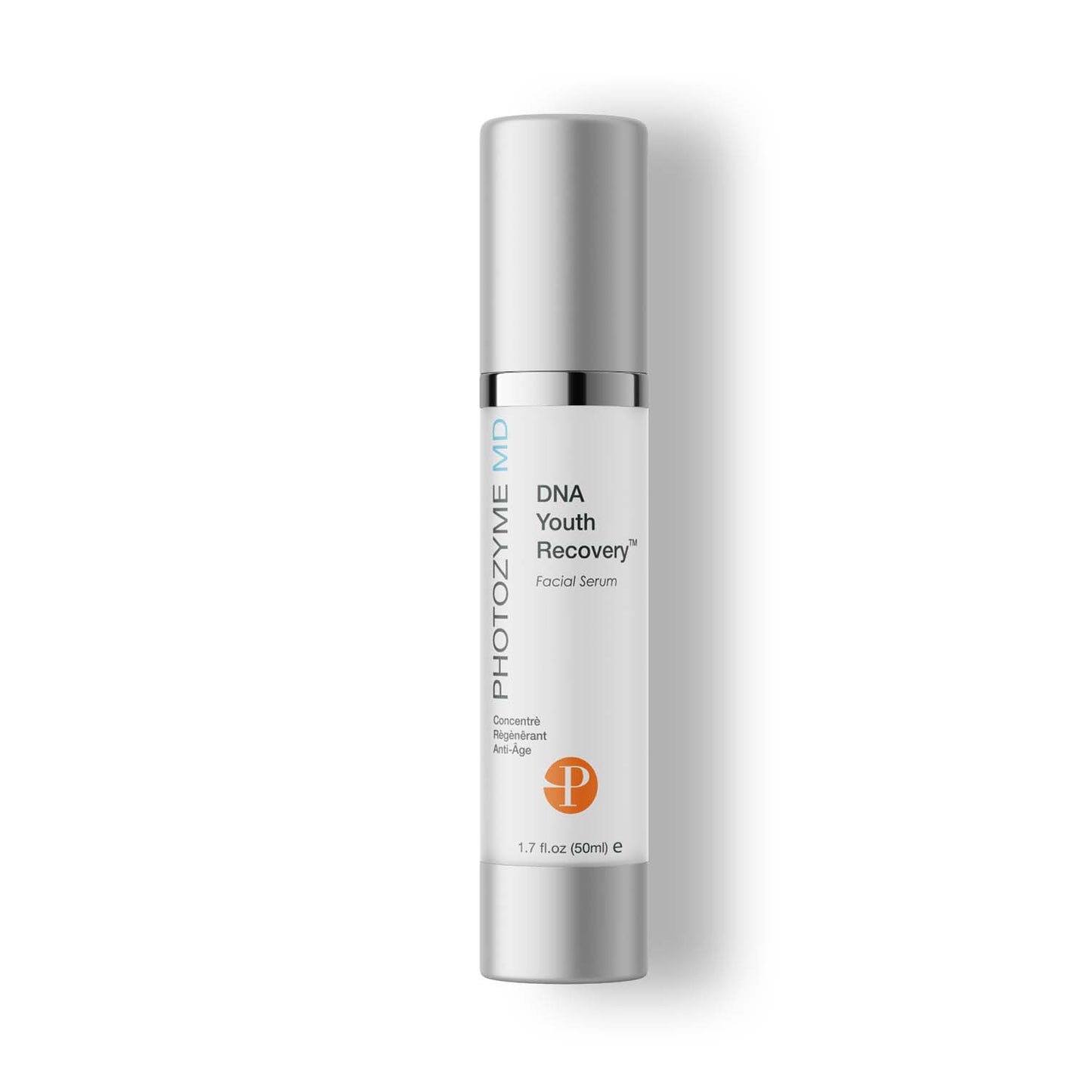
Our DNA Youth Recovery Facial Serum delivers DNA repair enzymes, hyaluronic acid, and antioxidants in a formulation that complements peptide serum use by addressing UV-induced cellular dysfunction that limits fibroblast collagen production capacity. Using both in the same routine means peptides are signaling fibroblasts that DNA repair enzymes have restored to more normal functional capacity, producing better structural outcomes than either active delivers in a routine where the other is absent.
Layering Peptides With Hyaluronic Acid
Our Reset Serum pairs hyaluronic acid with DNA repair enzymes as a foundational layer beneath peptide treatment serums. Applying it first to slightly damp skin creates a hydrated surface environment that improves peptide absorption and maintains the fibroblast moisture conditions required for collagen synthesis.
Building this sequence into a consistent night skincare routine structure produces compounding structural improvement that isolated product use cannot replicate. For a clinical perspective on hyaluronic acid formulation selection in this layering approach, Dermatologist-Recommended Serums With Hyaluronic Acid covers evaluation criteria to consider.
Sources:
- Zhang, Y., Shi, L., Zhao, Y., Xu, Y., Chen, H., & Wang, X. (2026). Oral and topical peptides for skin aging: Systematic review and meta-analysis of randomized controlled trials. Frontiers in Medicine, 13, 1618306. https://www.frontiersin.org/journals/medicine/articles/10.3389/fmed.2026.1618306/full
- Pickart, L., Vasquez-Soltero, J. M., & Margolina, A. (2015). GHK peptide as a natural modulator of multiple cellular pathways in skin regeneration. BioMed Research International, 2015, 648108. https://pmc.ncbi.nlm.nih.gov/articles/PMC4508379/
- Margolina, A., & Beitner, H. (2018). Regenerative and protective actions of the GHK-Cu peptide in the light of the new gene data. Cosmetics, 5(2), 29. https://pmc.ncbi.nlm.nih.gov/articles/PMC6073405/




 Free Shipping on US Orders $50+
 60-Day Money-Back Guarantee
 Dermatologist-Approved