The skin beneath your eyes is structurally unlike the rest of your face, and those differences make it the first place aging becomes visible. Understanding what makes this zone uniquely vulnerable explains why targeted treatment produces better results than applying your regular face products here.
The Structural Thinness Of Periorbital Skin
The skin beneath the eye is significantly thinner than facial skin elsewhere, with fewer sebaceous glands and a more delicate underlying structure. This thinness means there is less tissue to buffer the effects of UV exposure, repeated muscle movement, and environmental stress. Every expression contracts the orbicularis oculi muscle surrounding the eye, and over thousands of daily repetitions, these contractions etch lines into skin that lacks the thickness and resilience to fully recover between movements.
Reduced Oil Production And Barrier Vulnerability
The periorbital area produces less sebum than the rest of the face, making it inherently prone to dryness and transepidermal water loss. Without adequate surface lipids, the barrier in this zone is structurally weaker, allowing irritants to penetrate more easily and moisture to escape more rapidly. This chronic dehydration makes fine lines appear more prominent and reduces the skin's capacity to recover from daily stress, accelerating the visible progression of wrinkles over time.
UV Exposure And Cumulative Photodamage
The under-eye area receives substantial UV exposure throughout daily life, often with less sunscreen protection due to sensitivity concerns or incomplete application. Over the years, this cumulative photodamage degrades collagen and elastin, further thins the skin, and induces DNA mutations that accelerate structural decline. The oxidative stress from UV exposure in this area drives some of the most visible and persistent signs of aging that under-eye cream for wrinkles formulations are designed to address. For more on UV-driven periorbital discoloration, see our guide on What Causes Dark Circles Under Eyes. Research confirms that diminished collagen synthesis is a primary driver of dermal thinning and structural decline in aging skin (Biomedicines, 2023).
Loss Of Structural Support Over Time
As the facial structure ages, the fat compartments that provide volume and support around the eye shift and diminish. The ligaments and connective tissue holding these structures weaken, leading to hollowing, shadowing, and a crepe-like texture that reflects both dermal thinning and changes in deeper tissues beneath the skin's surface. For guidance on addressing puffiness alongside wrinkles, see our Best Eye Cream For Bags collection.
Retinol Around The Eyes: What You Need To Know
Retinol is one of the most clinically supported ingredients for wrinkle reduction, but applying it around the eyes requires a more careful approach than using it elsewhere on the face. Understanding how to use retinol in this sensitive zone allows you to access its collagen-stimulating benefits without compromising delicate periorbital skin.
Why Retinol Is Particularly Effective For Under-Eye Wrinkles
Retinol stimulates fibroblasts to produce new collagen and elastin while accelerating cell turnover that replaces damaged, photoaged cells with healthier tissue. Research confirms that retinol stimulates fibroblast activity, increasing collagen fiber synthesis, improving skin elasticity, and inhibiting matrix metalloproteinases that break down structural proteins (Cosmetics, 2019). In the under-eye area, where collagen loss and skin thinning are the primary drivers of wrinkle formation, these mechanisms directly address the structural causes of visible aging. Consistent use of a retinol eye cream formulation builds dermal density over time, improving the skin's ability to resist the dynamic creasing that leads to permanent fine lines.
Concentration Considerations For The Periorbital Area
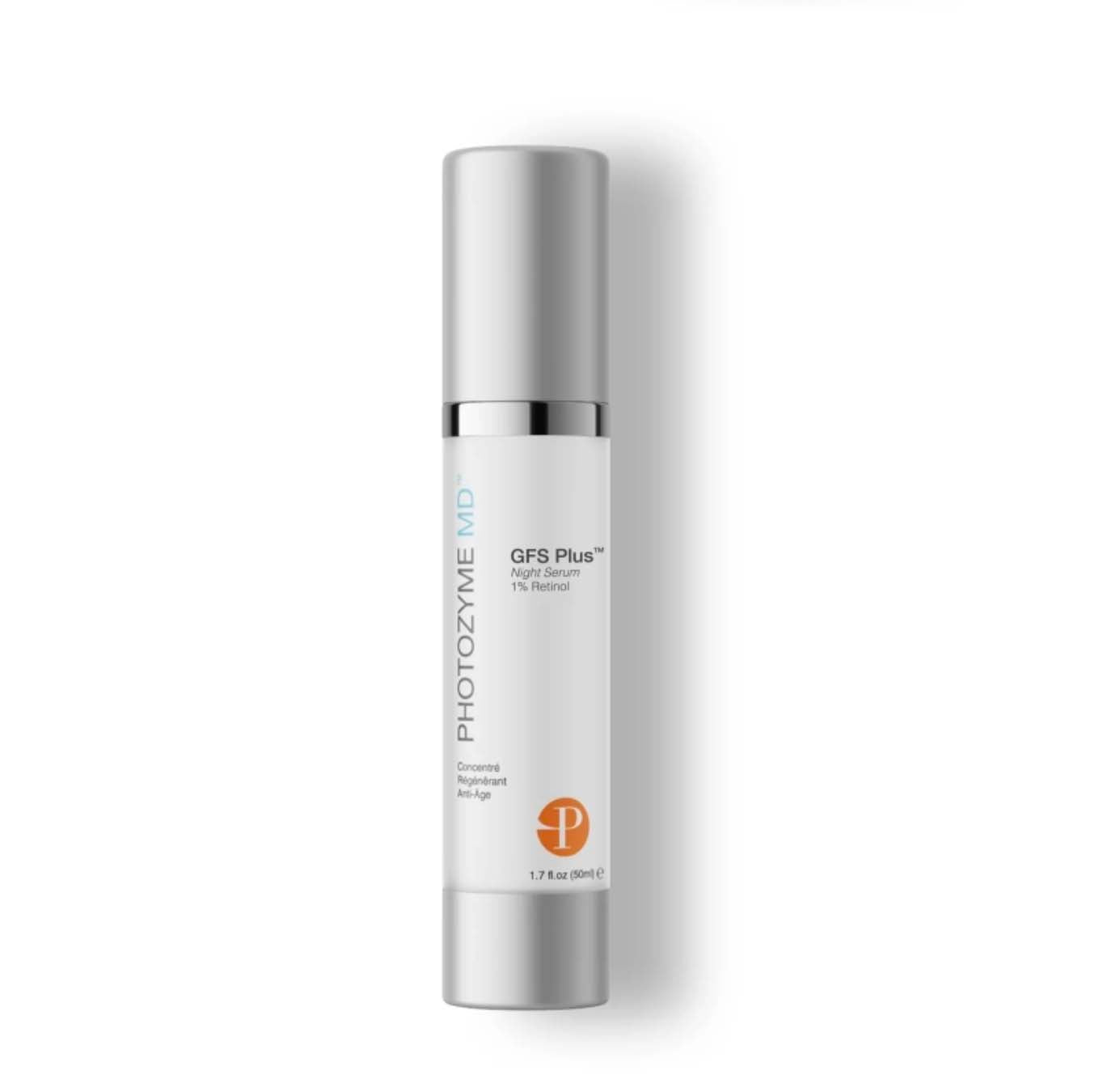
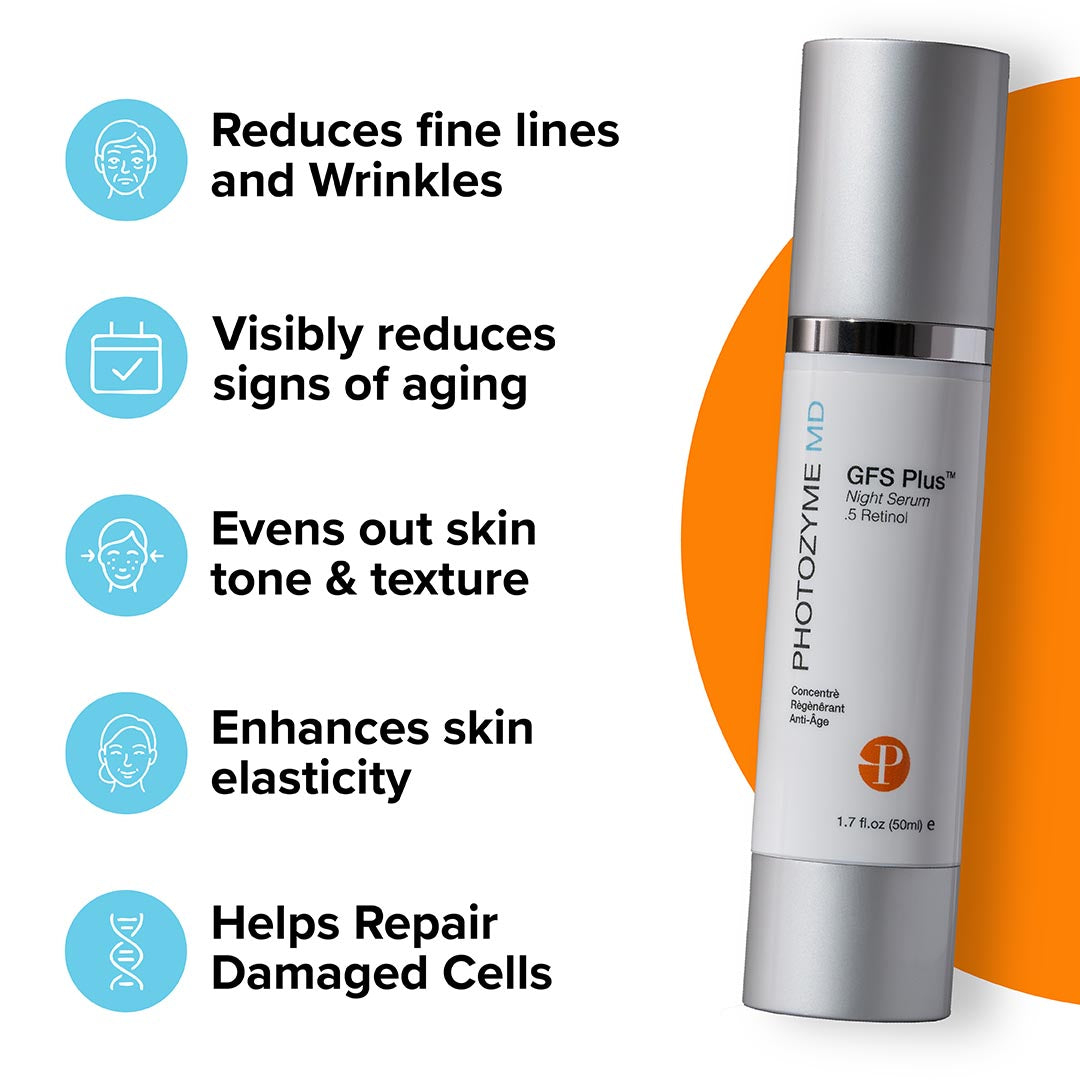
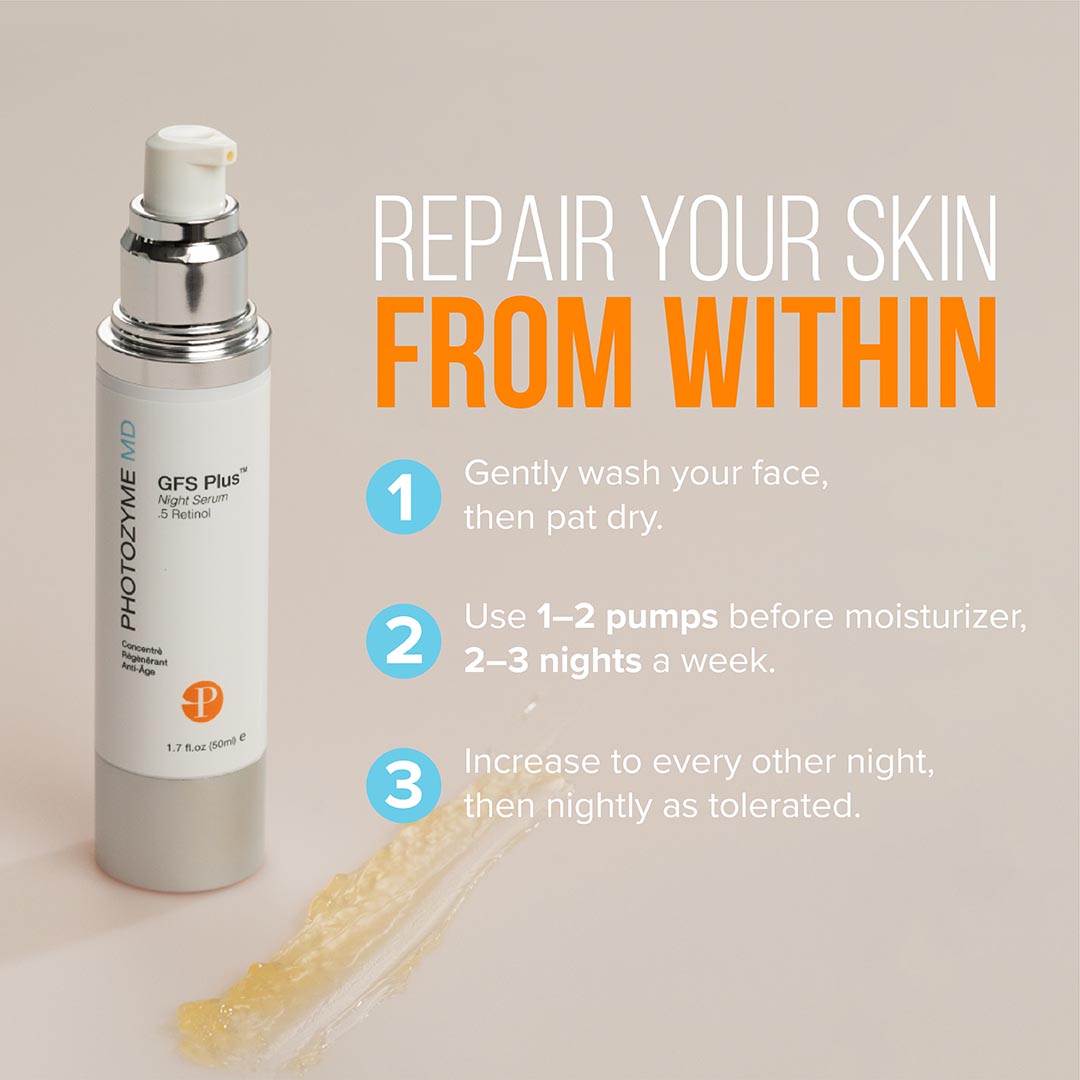
The thinness of periorbital skin makes it more sensitive to retinol than the rest of the face, and standard facial concentrations of 0.5% to 1% can cause unnecessary irritation in this area. Beginning with lower concentrations of 0.25% to 0.3% is a more appropriate starting point. Our GFS Plus Night Serum with 0.5% Retinol offers a gentler entry point, with DNA repair enzymes alongside the retinoid, while the 1% version suits those with established tolerance and should still be applied conservatively to the orbital bone area rather than directly beneath the lash line.
Application Technique For Under-Eye Retinol Use
Apply retinol to the orbital bone area rather than directly on the eyelid or immediately beneath the lash line, where skin is thinnest and most reactive. Always apply retinol to fully dry skin after hydrating serums have absorbed, as damp skin significantly increases penetration depth and the associated risk of irritation in this already-sensitive area.
Supporting Retinol With Hydration And Repair
Retinol's effectiveness around the eyes increases when supported by complementary ingredients that maintain barrier function during the adjustment period. Pairing it with DNA repair enzymes reduces the UV-induced oxidative load that compounds retinol's temporary disruption, while hyaluronic acid maintains the periorbital hydration that prevents retinol-induced dryness from temporarily worsening fine lines. For those looking to consolidate this approach, our iQuad eye cream delivers these complementary actives in a single periorbital formulation.




 Free Shipping on US Orders $50+
 60-Day Money-Back Guarantee
 Dermatologist-Approved