This store requires javascript to be enabled for some features to work correctly.
 Free Shipping on US Orders $100+
 60-Day Money-Back Guarantee
 Dermatologist-Approved
Free Shipping on US Orders $100+
60-Day Money-Back Guarantee
Dermatologist-Approved




Sun Damage
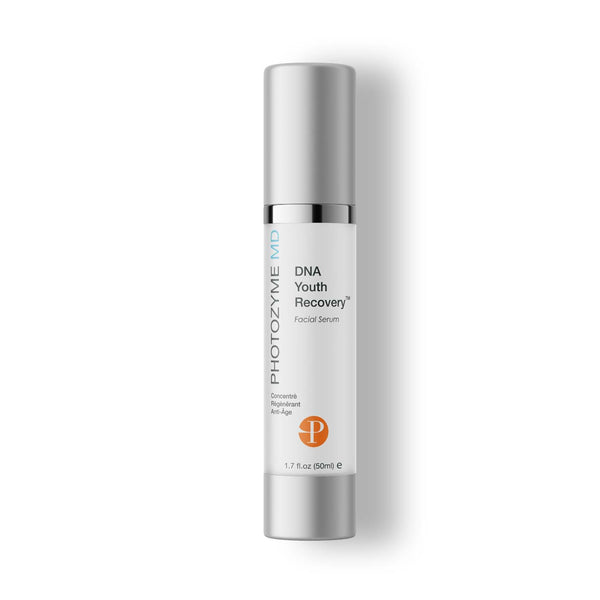
ELLE Names DNA Youth Recovery The Best Anti-Aging Serum For Sunspots
ELLE named Photozyme’s DNA Youth Recovery Facial Serum the best anti-aging serum for sunspots. Here’s what they highlighted and how to get the most from it.
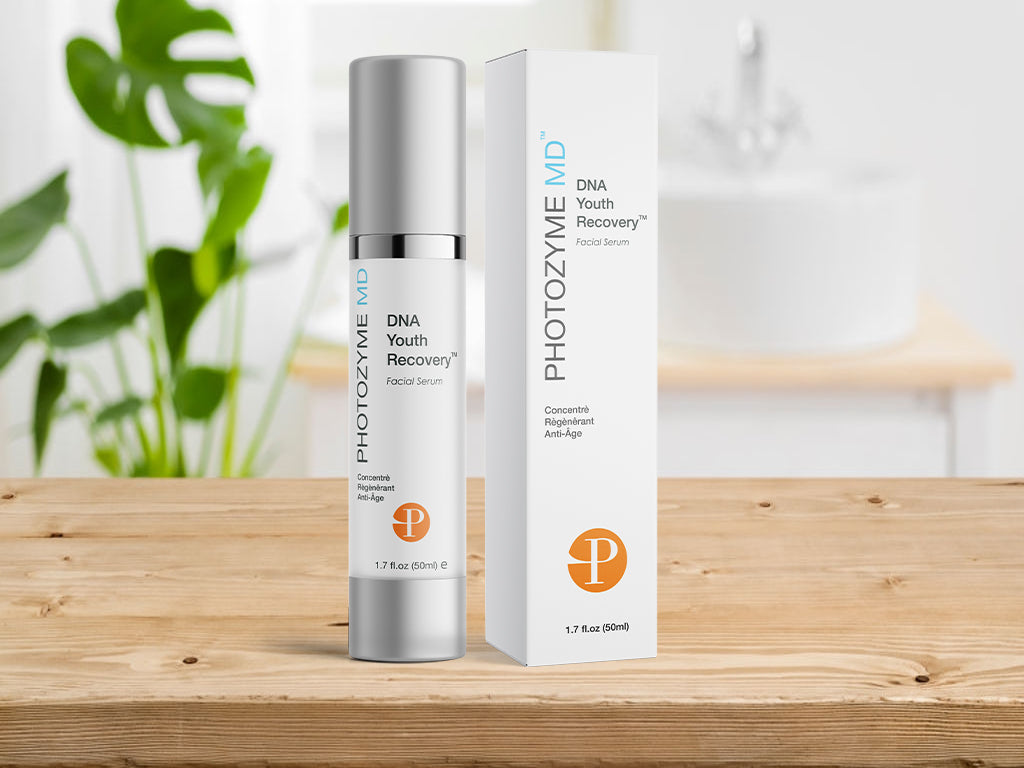
When ELLE rounded up the best anti-aging serums, Photozyme’s DNA Youth Recovery Facial Serum earned the spot for Best for Sunspots. Here’s what the editors and their expert highlighted, what the research says about the DNA repair enzymes inside it, and how to use it for the best results.
Key Takeaways
- Recognized by ELLE. DNA Youth Recovery was named the best anti-aging serum for sunspots in ELLE’s guide to the best anti-aging serums.
- Up to 70% fewer UV spots. In Photozyme’s testing, users saw up to 70% fewer UV spots after 12 weeks of twice-daily use.
- Backed by peer-reviewed research. In a published study, adding the DNA repair enzyme photolyase to SPF 50 sunscreen reduced UV-induced DNA damage by about 93%, compared with 62% for sunscreen alone.
What ELLE Said
In its guide to the best anti-aging serums, ELLE explained that serums are concentrated formulas designed to work more deeply than everyday creams, which is why they’re the foundation of an anti-aging routine.
Dermatologist Dr. Amy Lewis, interviewed for the piece, pointed to DNA Youth Recovery’s combination of DNA repair enzymes with vitamin C, vitamin E and ferulic acid, which together provide antioxidant protection, support collagen and brighten the complexion. ELLE also noted that, according to Photozyme’s testing, users may see up to 70% fewer UV spots after using the serum twice daily for 12 weeks. It listed the serum’s pros as brightening, helping protect against UV damage and promoting collagen, and noted it suits oily, combination, dry and normal skin.
Best for Sunspots: Photozyme DNA Youth Recovery Facial Serum. — ELLE
What’s Inside DNA Youth Recovery
The formula works on sun-damaged skin from two directions at once: repairing existing damage and defending against new damage.
DNA repair enzymes
Algae-derived enzymes, including photolyase, help repair UV-induced DNA damage in skin cells, damage behind sunspots and visible aging. Learn how photolyase works.
Vitamin C, vitamin E and ferulic acid
This antioxidant trio neutralizes free radicals from UV and pollution, supports collagen and helps brighten uneven tone.
Hyaluronic acid
Draws moisture into the skin for a smoother, plumper look and a lightweight finish that layers easily.
What The Research Shows
Photolyase is a DNA repair enzyme that reverses a major type of UV damage called cyclobutane pyrimidine dimers (CPDs). Plants and many other organisms make it naturally, but humans don’t, which is why topical photolyase is of such interest.
In a peer-reviewed study published in Molecular Medicine Reports, researchers exposed volunteers’ skin to simulated sunlight on four consecutive days and compared SPF 50 sunscreen alone with the same sunscreen plus photolyase. Compared with unprotected skin:
| Measure | SPF 50 alone | SPF 50 + photolyase |
|---|---|---|
| UV-induced DNA damage (CPDs) | Reduced about 62% | Reduced about 93% |
| UV-induced skin cell death | Reduced about 40% | Reduced about 82% |
In both measures, sunscreen plus photolyase performed significantly better than sunscreen alone. The researchers concluded that adding photolyase to a traditional sunscreen significantly improves protection against UV-induced DNA damage.
The study was small, with 10 volunteers with fair skin under lab-simulated sunlight, and tested a photolyase preparation rather than a finished consumer product, so larger studies are still worthwhile. It’s a strong reason to pair daily SPF with DNA repair enzymes rather than relying on sunscreen alone. Read more on why sunscreen alone isn’t enough.
Source: Berardesca E, Bertona M, Altabas K, Altabas V, Emanuele E. Reduced ultraviolet-induced DNA damage and apoptosis in human skin with topical application of a photolyase-containing DNA repair enzyme cream. Mol Med Rep. 2012;5(2):570–574. PubMed.
How To Use It
For best results, use it consistently, morning and night.
- Cleanse and pat skin dry.
- Apply a few drops to face, neck and chest, the areas that see the most sun.
- Follow with moisturizer. At night, add a richer cream if your skin is dry.
- Finish with broad-spectrum SPF 30+ every morning. DNA repair enzymes work alongside sunscreen, not instead of it.
Who It’s For
DNA Youth Recovery is a strong fit if you have:
- Sunspots or uneven tone from years of sun exposure.
- Fine lines and early wrinkles you want to address without harsh actives.
- Any skin type, including oily, combination, dry and normal.
- A routine that needs one hard-working serum that layers easily under moisturizer and sunscreen.
Final Thoughts
ELLE’s recognition reflects what DNA Youth Recovery was designed to do: help repair sun-damaged skin while protecting it with antioxidants. Pair it with daily sunscreen and give it 12 weeks of consistent, twice-daily use to see the difference in tone and texture.
Not sure whether a spot is a sun spot? Read how to tell sun spots from melanoma, and have any new or changing spot checked by a dermatologist.
Frequently Asked Questions
What did ELLE name DNA Youth Recovery?
ELLE named Photozyme DNA Youth Recovery Facial Serum the best anti-aging serum for sunspots in its guide to the best anti-aging serums.
How much can it reduce UV spots?
In Photozyme’s testing, users saw up to 70% fewer UV spots after 12 weeks of using the serum twice daily.
Is sunscreen with photolyase better than sunscreen alone?
In a peer-reviewed study, SPF 50 sunscreen plus photolyase reduced UV-induced DNA damage by about 93% versus unprotected skin, compared with about 62% for the sunscreen alone. Photolyase works alongside sunscreen; it doesn’t replace it.
What are the key ingredients?
DNA repair enzymes including photolyase, plus vitamin C, vitamin E and ferulic acid, with hyaluronic acid for hydration.
How often should I use it?
Twice daily, morning and night, after cleansing. Always follow with broad-spectrum sunscreen in the morning.
How long until I see results?
Many people notice smoother texture within a few weeks. In Photozyme’s testing, the reduction in UV spots was measured after 12 weeks of twice-daily use.
Shop the article
Products mentioned in this article